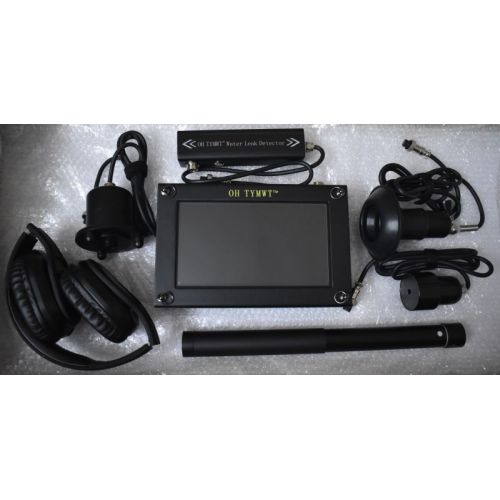
An underground water leak is normally located by combining pipeline information, flow or pressure evidence and a suitable pinpointing method. Use an acoustic water leak detector when a pressurized leak produces measurable sound. Use tracer gas leak detection when the leak is very small, the pipe is plastic or low pressure, or environmental noise masks the acoustic signal. Use GPR or a utility locator to support route mapping when appropriate—not as automatic proof of the hole.
A hidden pipeline leak can waste water, damage structures and increase operating costs long before water appears at the surface. However, wet ground alone does not identify the true leak point. Water can travel along a pipe trench, cable duct, foundation or soil layer and emerge several meters away from the defect.
Professional underground pipe leak detection therefore follows a process: understand the network, narrow the suspected section, collect repeatable signals and confirm the location before excavation. The detector is an important tool, but the result depends equally on pipe conditions and operating technique.
Common signs of a concealed or underground pipe leak
Start by confirming that the water loss is real and not caused by normal consumption, irrigation schedules or meter error. Typical warning signs include:
- Unexpectedly high water bills or continuous meter movement when outlets are closed.
- Pressure loss, pump cycling or reduced flow at fixtures and hydrants.
- Persistent damp areas, warm floor zones, mold, staining or damaged finishes.
- Soft ground, unusual vegetation growth, subsidence or water appearing through pavement joints.
- A consistent hissing, rushing or vibration signal near valves, meters and pipe connections.
Acoustic vs tracer gas leak detection
The two methods solve different field problems. Neither is universally better; the correct choice depends on whether the leak produces usable sound and whether the pipeline can be isolated for a tracer-gas test.
| Factor | Acoustic detection | Tracer gas detection |
|---|---|---|
| Best suited to | Pressurized leaks with a clear vibration or leak sound | Very small leaks, weak acoustic signals and difficult plastic lines |
| Typical equipment | Ground microphone, contact sensor, listening probe and signal analyzer | Tracer gas supply, regulator, injection connection and gas sensor |
| Pipeline operation | Often tested while the water line remains pressurized | Section is normally isolated, drained as required and filled with test gas |
| Main limitation | Traffic, machinery, deep burial, soft soil and plastic pipe can weaken the signal | Requires safe gas handling, pipeline access and sufficient time for gas migration |
| Strong advantage | Fast, non-invasive scanning and direct comparison of signal strength | Can reveal leaks that are almost silent under normal operating conditions |
How acoustic water leak detection works
When pressurized water escapes through a crack, loose joint or pinhole, it creates turbulence and vibration. Part of that energy travels along the pipe wall, while part travels through the surrounding ground or building material. An acoustic leak detector converts those vibrations into audible sound and visual signal information.
A contact sensor or listening probe is useful at accessible points such as meters, valves, hydrants and exposed pipe. A ground sensor is used over floors, concrete, asphalt or soil to compare the signal at closely spaced locations. The strongest signal may indicate the area closest to the leak, but a single loud reading is not enough—operators should repeat the test and check whether the signal remains consistent.
Acoustic detection performs best when:
- The pipeline has stable and adequate operating pressure.
- The test is completed during a quiet period with machinery and water use controlled.
- The pipe route and approximate depth are known.
- Sensors match the surface and application: contact, indoor floor or outdoor ground detection.
- Frequency filtering is adjusted to emphasize the leak signal and reduce background interference.
Compare TYM acoustic detector configurations
Review dual-sensor and indoor/outdoor systems for pressure-pipeline surveys.
When tracer gas is the better choice
Tracer gas detection is valuable when water loss is too small to create a reliable sound. A safe test-gas mixture is introduced into an isolated pipeline section under controlled pressure. The gas escapes through the defect, migrates toward the surface and is detected above the pipe route with a sensitive probe.
This method is particularly useful for low-pressure systems, small sprinkler leaks, concealed plastic pipes, complex indoor networks and sites with continuous background noise. It can also provide a second method for confirming an uncertain acoustic result.
Before a tracer gas test, confirm:
- The pipeline section can be isolated and accessed safely.
- The test procedure and gas mixture comply with local safety requirements.
- The test pressure is suitable for the pipeline and remains within its permitted limit.
- Wind, ventilation, sealed membranes and surface materials are considered when interpreting readings.
- The operator scans slowly and repeats suspected points before marking an excavation location.
Tracer gas should be used by trained personnel. Gas handling, regulators, connection fittings and pressure control must follow the relevant local rules and the equipment instructions.
How pipe material affects leak detection
Copper and steel
Metal generally transmits leak vibration well. Contact measurements at valves and fittings can help narrow the section before ground listening.
PVC, PPR and HDPE
Plastic absorbs more vibration, so the sound may be weaker and lower frequency. Shorter sensor spacing, adequate pressure and quiet conditions become more important.
Ductile iron and mains
Network layout, branches, diameter and depth affect signal travel. Section-by-section testing and multiple sensor types may be required.
Floor and wall pipes
Building noise and layered materials can mislead the operator. Compare adjacent points and confirm the result before breaking finishes.
A practical underground leak detection workflow
Collect site information
Record pipe material, diameter, depth, pressure, route, surface, valves, leak rate and operating schedule.
Confirm and isolate the loss
Use meter readings, pressure tests and valve isolation to narrow the network to a manageable section.
Survey accessible points
Listen at valves, meters, hydrants and connections. Compare signal character and strength—not volume alone.
Scan the pipe route
Use consistent sensor spacing and settings. Mark repeatable peaks and recheck them from both directions.
Change method if needed
If sound is weak or unstable, improve pressure and test conditions or move to tracer gas for confirmation.
Verify before excavation
Repeat the measurement, check nearby interference and choose the smallest justified excavation area.
Choosing professional water leak detection equipment
Do not select a detector from maximum depth alone. Depth claims are highly dependent on pressure, pipe material, surface, soil, leak size and ambient noise. A better equipment decision starts with the real application.
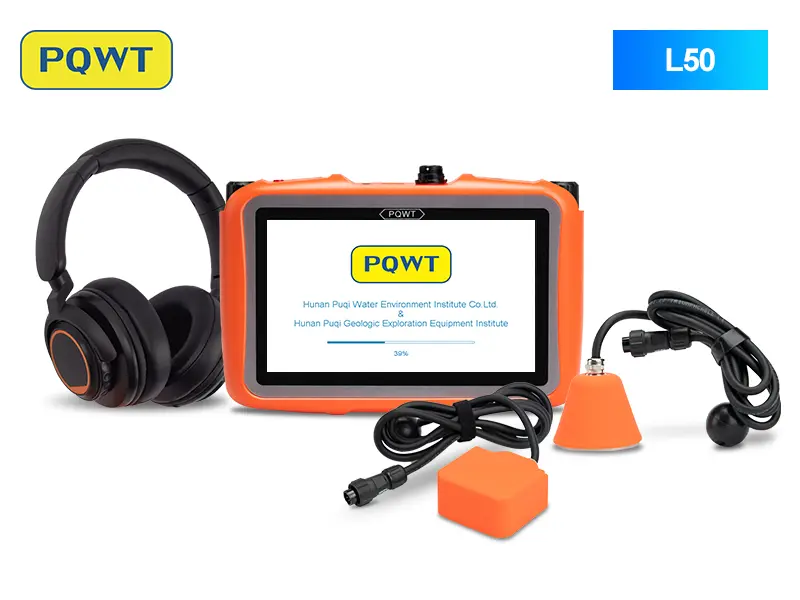
Compact concealed-pipe locating
Triangular and square sensors for floors, walls, kitchens and bathrooms.
View product →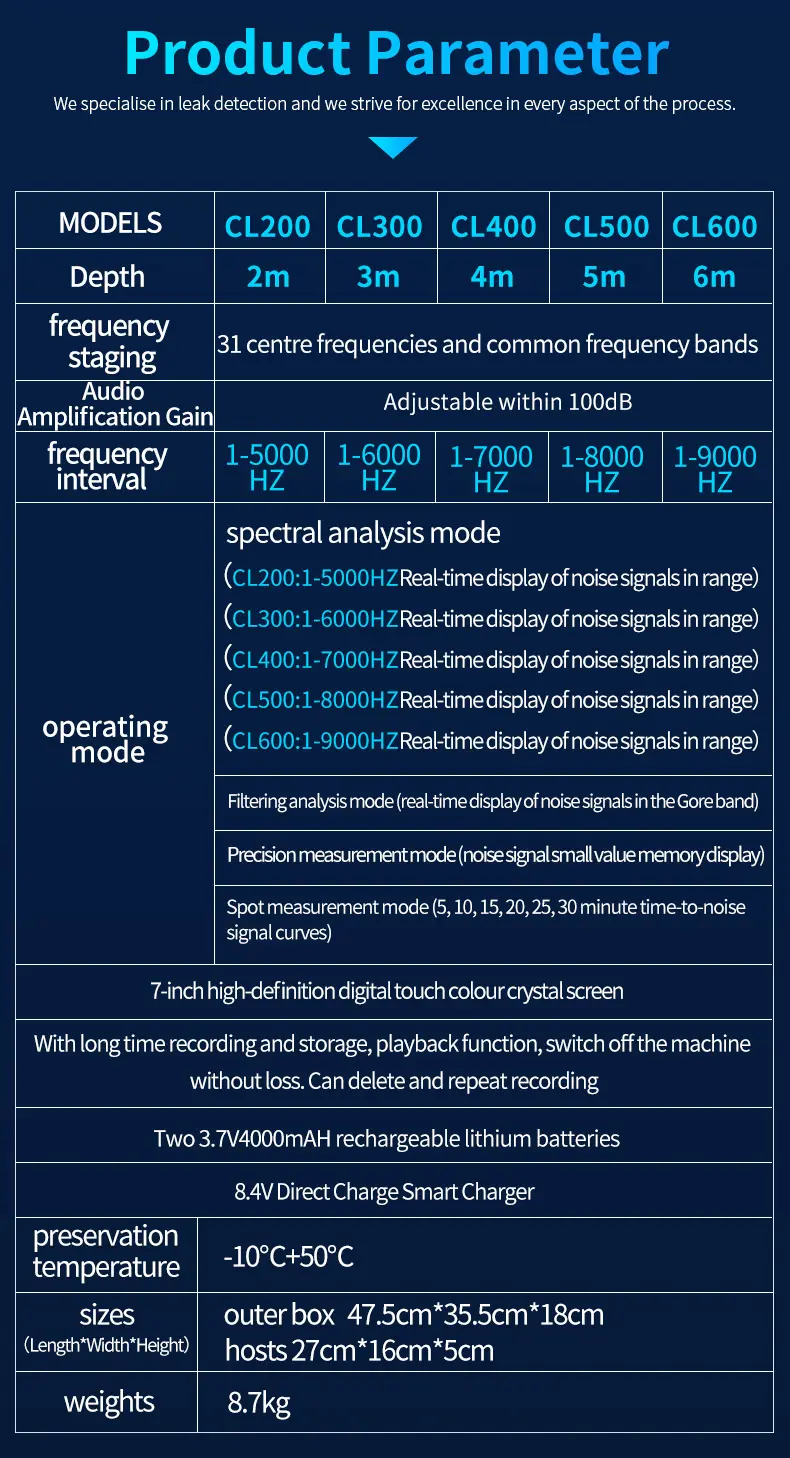
Professional spectrum analysis
Selectable frequency analysis and recording for pressurized water, heating and municipal pipes.
View product →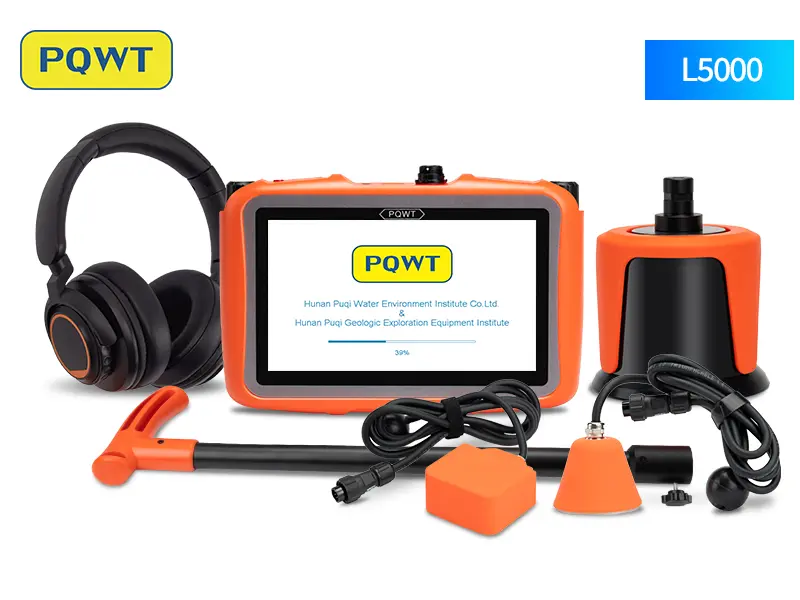
Three-sensor field workflow
Staged screening and pinpointing for concealed and buried pressure pipelines.
View product →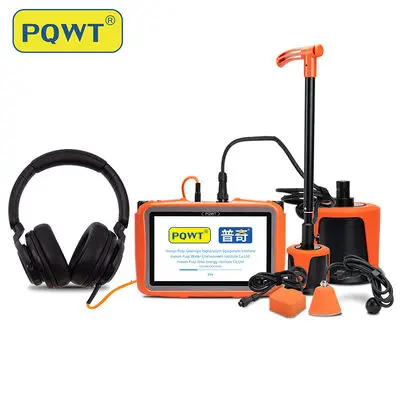
Four-sensor professional kit
General detection, precise locating and spectrum analysis for varied field conditions.
View product →For a broader comparison, visit our professional water leak detector collection or send the project conditions to our technical sales team.
Need route-mapping context? Read Can GPR Detect Water Leaks?. For a field checklist, download the English indoor, outside and fire-pipeline leak detection SOP.
Frequently asked questions
What is the best method for detecting an underground water pipe leak?+
Acoustic detection is usually the first choice for a pressurized pipe with a clear leak sound. Tracer gas is often more effective for very small leaks, low-pressure lines, plastic pipes or noisy sites where sound is weak.
Can an acoustic leak detector find leaks in PVC, PPR or HDPE pipe?+
It can, but plastic transmits leak noise less effectively than metal. Results improve when the pipe is adequately pressurized, the route is known and sensors can be placed close to the suspected area. Tracer gas may be preferable for very small plastic-pipe leaks.
Does a water leak detector show the exact leak point automatically?+
Professional instruments help narrow and verify the strongest leak signal, but the operator must compare readings, control interference and confirm the location. Site conditions and operating technique directly affect the result.
What information is needed before choosing leak detection equipment?+
Prepare the pipe material, diameter, estimated depth, pressure, route length, indoor or outdoor environment, surface type, estimated leak size and background-noise conditions.
Can GPR detect an underground water leak directly?+
Usually not. Ground-penetrating radar may help map a pipe, trench, void or moisture-related change, but acoustic, flow, pressure, correlation, tracer-gas or inspection evidence should confirm the leak point.
MODEL SELECTION SUPPORT
Not sure which leak detector fits your pipeline?
Send us the pipe material, diameter, depth, pressure, leak size, surface type and delivery country. We will recommend a suitable model and configuration.