Professional field equipment
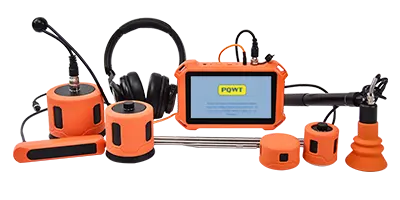
Underground Pipeline Water Leak Detection Equipment
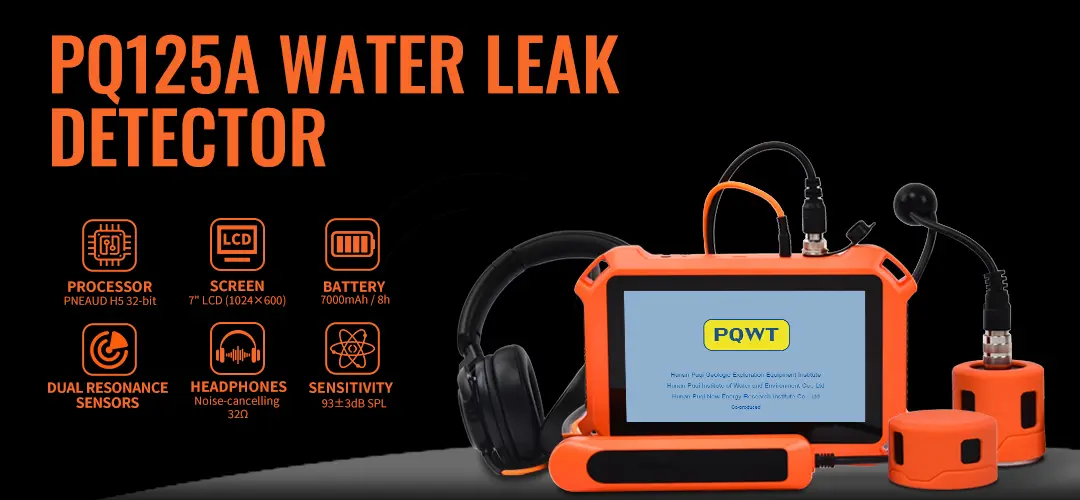
Professional acoustic and multi-sensor instruments for locating concealed and underground pipeline leaks indoors, outdoors and across utility networks.
PQWT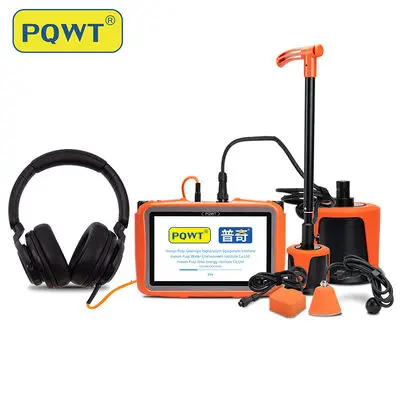
Working environmentIndoor, outdoor and buried pipelines
Detection methodsAcoustic, tracer-gas and pipeline-locating methods
Model optionsPQ125, L, CL and BT series
Applications
Applications
Underground outdoor pipes
Municipal and industrial networks
Key advantages
Key advantages
✓Multi-sensor acoustic analysis
✓Indoor and outdoor operation
✓Frequency and noise filtering
✓2-Year Warranty
✓Expert Support
Underground pipeline leak detector buyer guide
Choose water leak detection equipment from the pipe and site
Leak detection equipment should match the stage of the job: confirm water loss, narrow the affected section, pinpoint a probable repair zone and verify the result. Pipe material, pressure, depth, route length, access and background noise determine whether acoustic listening, correlation, tracer gas or a combined workflow is suitable.
Best when a pressurized leak produces repeatable sound or vibration.
Useful for quiet leaks, plastic pipe and isolated systems.
Compact, spectrum and multi-sensor workflows.
Verify the route and repeat the strongest zone before repair.
01
01 · Method
Which method is best for underground pipeline leak detection?
Acoustic listening is normally the fastest first-line method for a known pressurized pipe route with usable leak noise. Contact sensors screen valves and fittings; a ground sensor compares points above the route.
Tracer gas is useful when plastic pipe, low pressure, very small loss or site noise makes the acoustic signal weak. Correlation can estimate a position between accessible sensors, while flow and pressure tests confirm the faulty section rather than the exact point.
- Confirm abnormal flow or pressure loss
- Map the route and isolate the affected section
- Choose the physical signal that fits the pipe
- Keep settings and sensor contact consistent
- Verify with a second method before excavation
02
02 · Model fit
L50, CL200, L5000 or L7000?
Choose L50 for comparative listening on floors, walls and concealed indoor pipes. CL200 supports professional spectrum analysis and recording. L5000 and L7000 add broader multi-sensor workflows for indoor and outside buried pressure pipelines.
Send the actual pipe conditions before comparing prices. The right sensor package is more important than choosing the most expensive model.
03
03 · GPR question
Can GPR detect a water leak directly?
Ground-penetrating radar may reveal disturbed soil, voids, pipe position or moisture-related changes under favorable conditions, but it usually does not directly pinpoint the escaping hole. Conductive clay, wet ground, reinforcement and surface conditions can limit radar performance.
Use GPR as a route or context tool when appropriate, then confirm the suspected leak with flow, pressure, acoustic, correlation, tracer-gas or inspection evidence.
Leak detection selection guides
Related resourceUnderground pipeline leak detection workflow
Compare acoustic and tracer-gas methods and follow a field-ready process.
Explore specifications →Related resourceCan GPR detect water leaks?Understand where radar helps and which method confirms the leak point.
Explore specifications →Related resourceDownload the pipeline leak detection SOPGet the English indoor, outside and fire-pipeline procedure PDF.
Explore specifications →Match the detector to the actual pipeline
Send country, pipe material, diameter, pressure, burial depth, route length, surface, access points, symptoms and preferred training language.
FAQ
Frequently asked questions
Which method is best for underground pipeline leak detection?+
Start with acoustic comparison when a pressurized leak produces usable sound. Consider tracer gas for quiet, plastic or isolated pipes and correlation for defined sections with accessible sensor points.
Can GPR detect a water leak directly?+
Usually not. GPR may show pipe position, disturbed soil, voids or moisture-related changes, but acoustic, pressure, flow, tracer-gas or inspection evidence should confirm the leak.
What is the difference between L50 and L5000?+
L50 is a compact indoor concealed-pipe acoustic detector. L5000 uses a broader multi-sensor workflow for indoor and outside pressurized pipelines.
What information is needed to select a leak detector?+
Provide pipe material, diameter, pressure, depth, route length, indoor or outdoor environment, surface, access points, symptoms, destination and quantity.
Request a quotation
Request a quotation
Tell us your country, application and required depth. We will confirm the model, accessories, shipping and current export price.
Your quotation confirms the equipment, included accessories, freight, estimated dispatch / transit time, payment options and whether import duties or taxes are included. Please provide the delivery destination for an accurate total. Payment options →
Already own a device? Get after-sales help