2-Year WarrantyGlobal ShippingExpert Support

Home/Water Leak Detectors/PQWT-125E

Professional field equipment2-year warranty

PQWT-125E Acoustic & Tracer Gas Water Leak Detector

PQWT-125E combines a full acoustic sensor kit with tracer-gas detection for difficult indoor and outdoor leaks, especially when acoustic transmission is weak or site noise is high.

Current export priceRequest today’s quotation

Price is confirmed by model, accessories, quantity and destination.

Selected model
PQWT-125E
Minimum order
Confirmed in quotation
Your reply includes model confirmation, current export price, lead time and shipping options.
Working environmentIndoor / outdoor / tracer gas
Manufacturer-stated depthUp to 8 m with TLS-H8
Manufacturer-stated positioningIndoor ±0.25 m; outdoor ±1 m
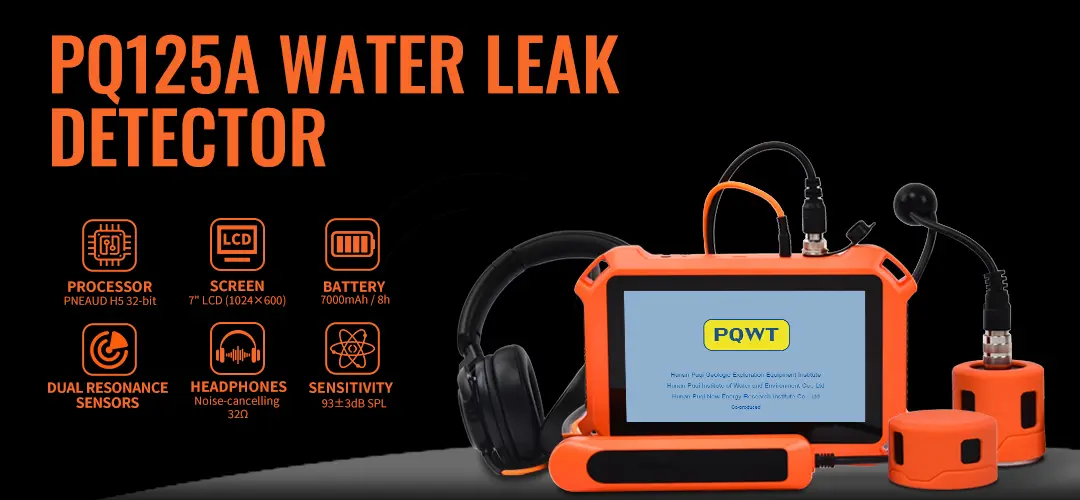
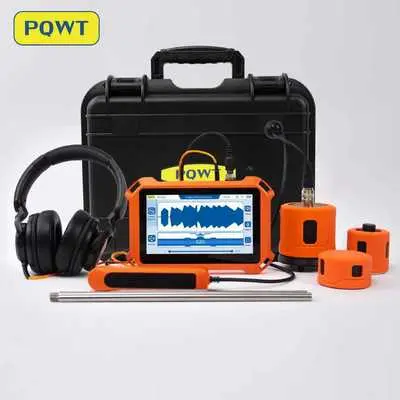
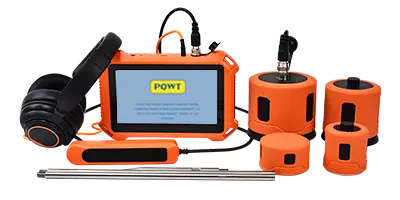
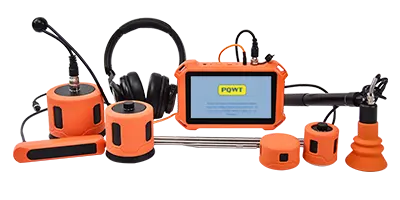
Sensor configuration4 acoustic sensors + TLS-H8

About this product

  • Multi-sensor acoustic analysis
  • Indoor and outdoor operation
  • Tracer-gas detection mode
B2B order supportFormal quotation · Proforma invoice · Export packing
Remote trainingTechnical support
2-year warrantyExpert Support
Working environmentIndoor / outdoor / tracer gas
Manufacturer-stated depthUp to 8 m with TLS-H8
Manufacturer-stated positioningIndoor ±0.25 m; outdoor ±1 m
Sensor configuration4 acoustic sensors + TLS-H8

Applications

Applications

01

Concealed indoor pipes

02

Underground outdoor pipes

03

Municipal and industrial networks

Key advantages

Key advantages

Multi-sensor acoustic analysis
Indoor and outdoor operation
Tracer-gas detection mode
2-Year Warranty
Expert Support

Official specification guide · PQWT-125E

PQWT-125E specifications, sensors and field workflow

PQWT-125E is a pressure-pipeline leak detector configured for difficult indoor and outdoor pressure-pipeline leaks requiring acoustic and tracer-gas workflows. The technical values below are based on the manufacturer-published specification; the field guidance explains how to use those capabilities without treating one sound reading as automatic proof of a leak.

Detection functionIndoor / Outdoor / Tracer gas

difficult indoor and outdoor pressure-pipeline leaks requiring acoustic and tracer-gas workflows

Manufacturer-stated depth8 m with TLS-H8 tracer-gas sensor

Actual signal quality depends on pipe, pressure, soil, surface and noise.

Manufacturer-stated positioningIndoor ±0.25 m; outdoor ±1 m

Verify the suspected zone with repeat measurements before excavation.

Warranty2 years

The formal quotation confirms the supplied configuration and service terms.

Technical overview

Technical overview

Brand / model
PQWT / PQWT-125E
Detection function
Indoor / Outdoor / Tracer gas
Sensor configuration
DMR-V59 + DMR-H40 + RCS-S3 + RCS-L6 + TLS-H8
Manufacturer-stated measurement depth
8 m with TLS-H8 tracer-gas sensor
Manufacturer-stated positioning range
Indoor ±0.25 m; outdoor ±1 m
Detection modes
General Detection and Location
Gain
10 adjustable levels; default level 3
Volume
10 adjustable levels; default level 5
Working temperature
-20 °C to 50 °C
Display
7-inch LCD, 1024 × 600
Power consumption
Approximately 3 W
Working time
Up to 8 hours
Charging time
6–8 hours
Battery
3.7 V, 7000 mAh
Host weight
0.6 kg
Host dimensions
221 × 149 × 43 mm
Warranty / origin
2 years / Changsha, Hunan, China
01
01 · Model fit

Where PQWT-125E fits in the PQ125 range

PQWT-125E is intended for difficult indoor and outdoor pressure-pipeline leaks requiring acoustic and tracer-gas workflows. Choose 125E when the full four-sensor acoustic kit and TLS-H8 tracer-gas verification are needed for difficult projects.

The instrument collects and displays leak-related sound and vibration from a pressurized pipeline. The operator compares several points, narrows the interval and verifies whether the strongest repeatable signal is consistent with the pipe route and the observed water-loss symptoms.

  • Low-signal or noisy leak investigations
  • Plastic-pipe and deep outdoor verification
  • Indoor and outdoor professional service work
  • Municipal, industrial, fire and property networks
02
02 · Sensor selection

Match the supplied sensor to the surface and pipe network

The published sensor configuration is DMR-V59 + DMR-H40 + RCS-S3 + RCS-L6 + TLS-H8. Each sensor has a different contact method and application range, so selecting the correct probe is part of the survey rather than an optional final step.

Keep the sensor stable, use the same contact pressure and settings at comparison points, and avoid touching or moving the cable while listening. Poor contact can create a false change that looks like a leak signal.

  • DMR-V59 and DMR-H40: floor, wall and confined indoor work
  • RCS-S3 and RCS-L6: outdoor acoustic comparison
  • TLS-H8: manufacturer-stated tracer-gas detection depth up to 8 m
03
03 · Operating workflow

Screen, narrow, pinpoint and verify

First confirm the pipe route, material, diameter, approximate depth and operating pressure. Record pumps, valves, traffic and other noise sources. Establish a reference reading away from the suspected area before searching for a peak.

Use General Detection to compare a wider route. Reduce the spacing around a repeatable change, then use Location mode to compare the suspected point with nearby control points from both directions. Recheck at a quieter time if machinery or traffic dominates the spectrum.

  • Confirm the route and accessible valves or fittings
  • Keep gain, volume and sensor placement consistent
  • Compare multiple points instead of trusting one loud reading
  • Repeat the strongest zone from both directions
  • Combine acoustic evidence with pressure, flow, meter and moisture checks
04
04 · Site conditions

Understand what changes the detection result

Leak sound usually travels more clearly through rigid pipe, higher operating pressure and firm ground contact. Plastic pipe, low pressure, a very small leak, loose backfill, deep burial and soft surfaces can attenuate the signal.

The published depth and positioning values describe the manufacturer-stated capability, not a universal guarantee. Pipe material, diameter, pressure, burial medium, surface construction, background noise and operator technique all affect field performance.

05
05 · Configuration & support

Information required for an accurate quotation

Send the country, indoor or outdoor application, pipe material, diameter, burial or concealment depth, operating pressure and approximate survey length. These details allow the team to check the selected model and sensor package before quoting.

The standard host warranty is two years. The formal quotation and packing list remain the final reference for current accessories, shipping, training and service coverage.

PQWT-125E

Check the PQWT-125E configuration for your pipeline

Send pipe material, diameter, pressure, depth, survey length, surface type and destination. We will check the model, sensor package, shipping and current export quotation.

Request a PQWT-125E quotationSend project details on WhatsApp

FAQ

Frequently asked questions

What is the PQWT-125E designed for?+

PQWT-125E is configured for difficult indoor and outdoor pressure-pipeline leaks requiring acoustic and tracer-gas workflows. Use the model and sensor combination that matches the real pipe environment.

What sensors are included with PQWT-125E?+

The published configuration is DMR-V59 + DMR-H40 + RCS-S3 + RCS-L6 + TLS-H8. The formal quotation and packing list confirm the current supplied kit.

What are the stated depth and positioning range?+

The manufacturer states a measurement depth of 8 m with TLS-H8 tracer-gas sensor and a positioning range of Indoor ±0.25 m; outdoor ±1 m. Field results vary with pressure, pipe, burial conditions, surface, noise and technique.

Can it be used on plastic pipe?+

Yes when the selected sensor and site conditions are suitable, but plastic often transmits less leak sound than rigid metal. Low pressure, deep burial or soft soil may require additional verification or tracer gas.

Does it automatically mark the exact leak point?+

No. Use repeatable comparison readings, confirm the pipe route and combine the acoustic result with flow, pressure, meter and moisture evidence before repair.

What details are needed for a quotation?+

Provide country, pipe material, diameter, depth, pressure, route length, indoor or outdoor setting, surface type, quantity and preferred training language.

Request a quotation

Request a quotation

Tell us your country, application and required depth. We will confirm the model, accessories, shipping and current export price.

Email our sales team
Get a quotationWhatsApp