Choose the PQWT-125 model by working environment and sensor package—not by the largest stated depth. PQWT-125A focuses on concealed indoor pipes, 125B on outdoor ground listening, 125C on touchscreen multi-sensor work, 125D on a broader four-sensor indoor/outdoor kit, and 125E adds tracer-gas detection for difficult leaks. Pipe material, pressure, burial depth, surface and background noise still control field performance.
The PQWT-125 series uses related acoustic principles, but the models are not interchangeable packages. A technician working under tiled floors needs different sensor contact from a municipal team testing a buried main, while low-pressure plastic pipe or a noisy site may require a complementary verification method.
This guide separates the models by application, sensors and workflow so a quotation can be based on the real project instead of choosing only from a model number.
What changes across the PQWT-125 series?
The main differences are the intended working environment, the included sensors and whether the kit supports acoustic work alone or acoustic plus tracer-gas detection. More sensors can cover more contact conditions, but they also require the operator to understand when and where each sensor should be used.
A larger package is not automatically better for every job. An indoor maintenance technician may work faster with a focused floor-and-wall kit, while a contractor handling indoor branches and outdoor mains may need the broader coverage of 125D or 125E.
Floors and walls
Use stable contact points and compare repeated readings along a mapped concealed pipe route.
Buried pressure pipes
Map the route first, then compare valves, hydrants, fittings and ground points under similar settings.
Complementary verification
Weak acoustic transmission may require pressure testing, correlation, tracer gas or inspection before excavation.
PQWT-125A, 125B, 125C, 125D and 125E compared
| Model | Primary project fit | Sensor approach | Best reason to shortlist |
|---|---|---|---|
| PQWT-125A | Concealed indoor pressure pipes | Dedicated floor and wall acoustic sensors | Focused work in kitchens, bathrooms, floors and walls |
| PQWT-125B | Outdoor buried pressure pipelines | Outdoor ground-listening sensor | Route-based screening and comparison on hard or soft surfaces |
| PQWT-125C | Indoor and outdoor professional inspection | Touchscreen multi-sensor acoustic system | One platform for comparing leak-like signals in mixed work |
| PQWT-125D | Broader indoor and outdoor projects | Four acoustic sensors | More contact options for branches, mains and different surfaces |
| PQWT-125E | Difficult indoor/outdoor leaks | Four acoustic sensors plus tracer-gas sensor | Adds a complementary method when acoustic evidence is weak |
Choose the model from the job—not from the model hierarchy
Define indoor, outdoor or mixed work
Indoor concealed branches favor floor and wall contact. Outdoor mains require route mapping, fittings and repeatable ground contact.
Identify pipe material and pressure
Metal normally transmits acoustic energy more strongly than many plastic pipes. Low pressure can weaken the signal.
Check access and surface
Valves, meters and exposed fittings provide useful contact points. Concrete, asphalt, soil and walls require different sensor placement.
Decide whether a second method is needed
If the project includes plastic pipe, high noise or weak pressure, consider whether tracer gas, correlation or pressure testing should be available.
Seven conditions that control acoustic leak detection
- Pipe material and diameter influence how vibration travels.
- Operating pressure and leak size influence available acoustic energy.
- Burial or concealment depth reduces the signal reaching the sensor.
- Soil, concrete, asphalt and wall construction change transmission and sensor contact.
- Traffic, pumps, machinery and electrical noise can create false peaks.
- Knowing the pipe route prevents comparing unrelated points.
- Repeated readings and a second verification method reduce unnecessary excavation.
Send these details before requesting a quotation
| Project detail | Why it matters |
|---|---|
| Country and delivery city | Confirms language, shipping and commercial terms |
| Indoor, outdoor or both | Determines the useful sensor package |
| Pipe material and diameter | Changes acoustic transmission and model fit |
| Working pressure | Low pressure can reduce leak noise |
| Burial or concealment depth | Helps assess whether acoustic work alone is realistic |
| Route length and access points | Long lines may need zoning or correlation before pinpointing |
| Surface and background noise | Controls sensor contact and the best testing time |
Review the PQWT-125 product pages
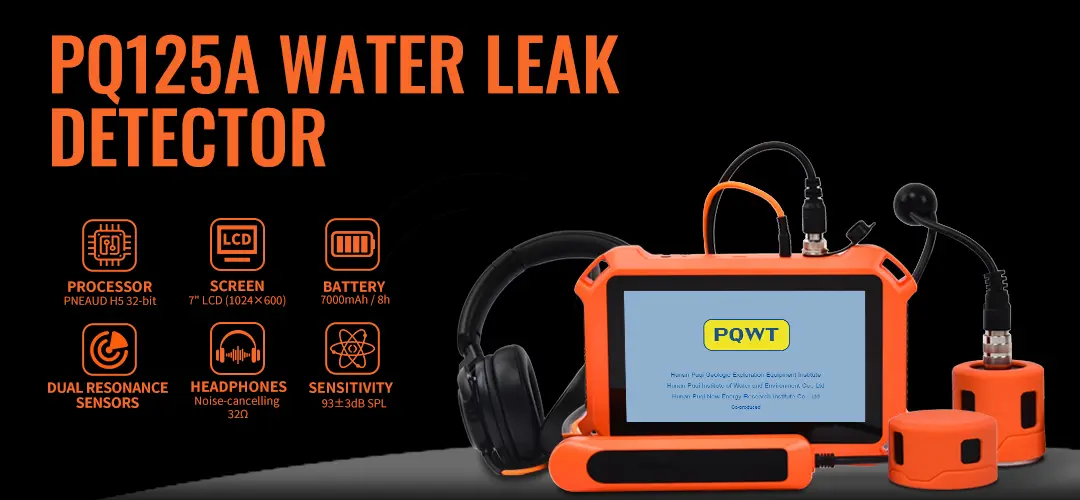
Indoor floor and wall leak detector
Focused acoustic configuration for concealed indoor pressure pipes.
View product →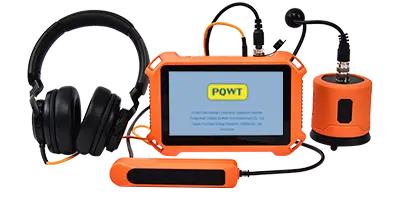
Outdoor buried-pipe leak detector
Ground-listening workflow for mapped pressurized pipelines.
View product →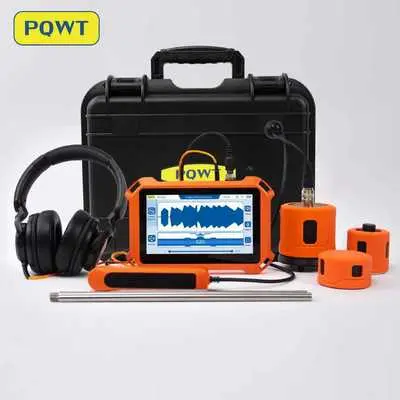
Touchscreen multi-sensor system
Professional acoustic comparison for mixed indoor and outdoor work.
View product →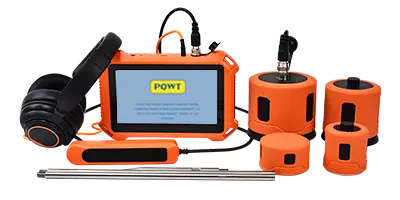
Four-sensor acoustic kit
Broader contact options for indoor branches and outdoor mains.
View product →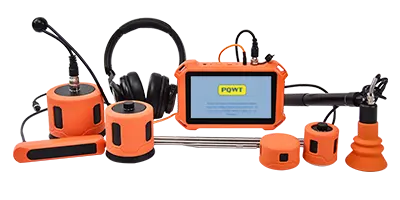
Acoustic and tracer-gas kit
Adds tracer-gas verification for difficult leak conditions.
View product →Frequently asked questions
What is the main difference between PQWT-125A and PQWT-125B?+
PQWT-125A is focused on concealed indoor pipes with floor and wall sensors. PQWT-125B is focused on outdoor buried pressure pipes and comparative ground listening.
When should I choose PQWT-125D instead of 125C?+
Review 125D when the project needs a broader four-sensor acoustic kit for varied indoor and outdoor contact conditions. Confirm the exact included sensor list in the quotation.
Why does PQWT-125E include tracer-gas detection?+
Tracer gas can provide complementary evidence when acoustic transmission is weak, such as some plastic-pipe, low-pressure or noisy projects. It still requires suitable procedures and local safety rules.
Can the PQWT-125 series detect every plastic-pipe leak?+
No detector can guarantee every site. Plastic material, pressure, burial, leak size and noise can weaken the signal. Difficult cases may require closer spacing and another verification method.
Does the deepest stated model always detect better?+
No. Published ranges are not a universal performance guarantee. The correct sensor, surface contact, pressure, route information and repeatable comparison are more important than one depth number.
What should be included in a formal quotation?+
Ask for the exact model, every sensor and cable, accessories, training, written warranty, lead time, shipping term, quantity and beneficiary details.
PROJECT REVIEW & MODEL SELECTION
Get the right PQWT-125 configuration
Send your country, indoor/outdoor application, pipe material, diameter, pressure, depth, route length, surface and background noise. We will compare 125A–125E and confirm the current package and quotation.