GPR can sometimes support a water-leak investigation by locating a buried pipe, disturbed soil, voids or moisture-related changes. It normally does not directly identify the exact hole in a pressurized pipe. Conductive clay, saturated ground, reinforcement and an unsuitable antenna can reduce radar performance. Confirm a repair point with pipe-route data plus flow, pressure, acoustic, correlation, tracer-gas or inspection evidence.
Searches for “GPR water leak detection” often combine two different tasks: finding the route of a buried pipe and pinpointing the point where water escapes. Ground-penetrating radar may help with the first task and, in favorable ground, may reveal secondary changes around a leak. Those indications are not the same as directly detecting the opening in the pipe.
A reliable survey defines what each method proves. Radar can add spatial context; flow and pressure confirm loss; acoustic, correlation or tracer gas can narrow and pinpoint; excavation or repair verifies the result.
What ground-penetrating radar actually measures
GPR transmits electromagnetic pulses into the ground and records reflections caused by contrasts in electrical properties. A pipe, trench boundary, void, reinforcing bar, rock contact or moisture change may produce a response. The result is an interpreted radar profile rather than a direct photograph of the pipe or leak.
Water changes the electromagnetic behavior of soil, but the effect is not unique. Natural moisture variation, clay, recent rain, backfill and drainage can create similar patterns. A radar anomaly must be checked against the mapped route and other leak evidence.
Where GPR can add value to a leak investigation
Radar is most useful when the survey objective, target depth, antenna frequency and expected ground conditions are defined in advance. It is a supporting tool rather than a universal replacement for leak-specific methods.
- Mapping a non-metallic or poorly documented pipeline route where ground conditions are favorable.
- Identifying trench edges, voids, washout or disturbed material that may affect repair planning.
- Checking the relationship between a moisture-related anomaly and the expected pipe route.
- Reducing excavation risk by adding subsurface context before opening a road, slab or landscaped area.
- Supporting a multi-method survey when acoustic results are broad or the route is uncertain.
Why GPR may fail to show a buried water leak
A negative radar result does not prove that the pipe is leak-free. It may only mean that the site, depth, target or antenna did not produce a resolvable response.
Conductive clay or saturated soil
High electrical conductivity attenuates radar energy and can sharply reduce useful depth.
Reinforcement and dense utilities
Steel mesh, cables and overlapping services can obscure the pipe or create complex reflections.
Small pipe or deep burial
Target size, depth and antenna frequency control resolution; one setup cannot maximize both depth and detail.
Non-unique moisture response
Rain, irrigation, drainage and soil changes can resemble a leak-related wet zone.
GPR vs acoustic, correlation and tracer-gas methods
| Method | What it is strongest at | What it does not prove alone |
|---|---|---|
| GPR | Pipe route, trench, void and subsurface-context mapping | The exact opening in a pressurized pipe |
| Acoustic listening | Comparing leak sound on pressurized pipes | That one loud reading is the true excavation point |
| Correlation | Estimating a position between two accessible sensors | A correct result when pipe length or sound velocity is wrong |
| Tracer gas | Quiet, small, plastic-pipe or isolated-system leaks | A surface peak unaffected by gas migration |
| Flow / pressure test | Confirming loss and narrowing a faulty section | The exact point of failure |
A better underground pipeline leak-detection workflow
- Confirm abnormal water loss with meter, flow, pressure or consumption evidence.
- Collect plans and mark pipe material, diameter, pressure, depth, branches, valves and accessible fittings.
- Locate the route with drawings, a suitable utility locator or GPR when the route is uncertain and conditions permit.
- Screen the network using valve isolation, contact listening, logging or correlation to narrow the section.
- Pinpoint with repeatable ground listening or tracer gas, keeping sensor spacing and settings consistent.
- Use GPR or other imaging only where it adds useful subsurface context to the suspected zone.
- Confirm with a second independent method before drilling or excavation, then re-test after repair.
Equipment for route locating and leak pinpointing
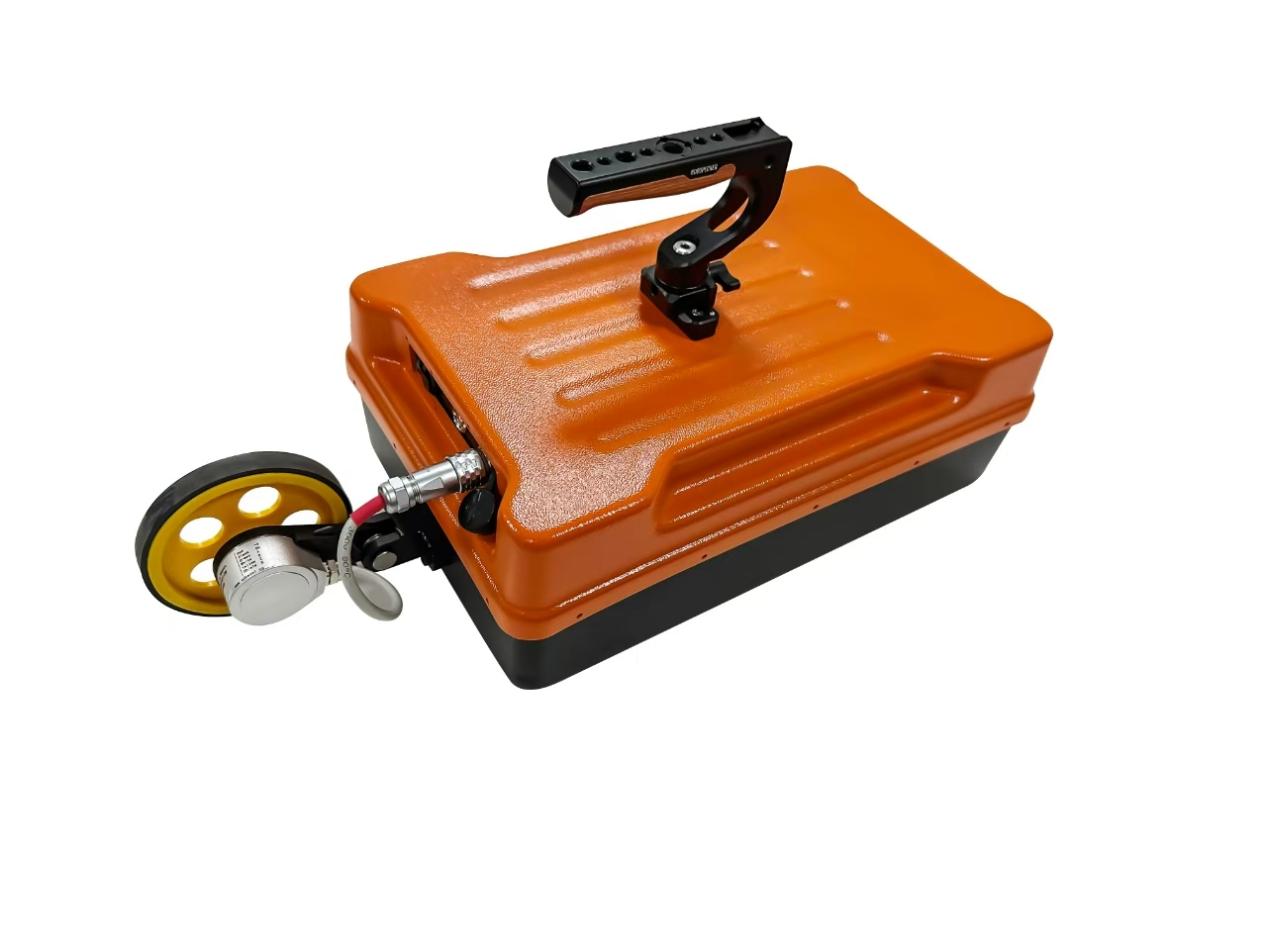
PQ622, PQ625 and PQ626 radar selection
Match antenna frequency to target size, depth and site conditions. Compare structural, utility and geological applications before requesting a configuration.
View product →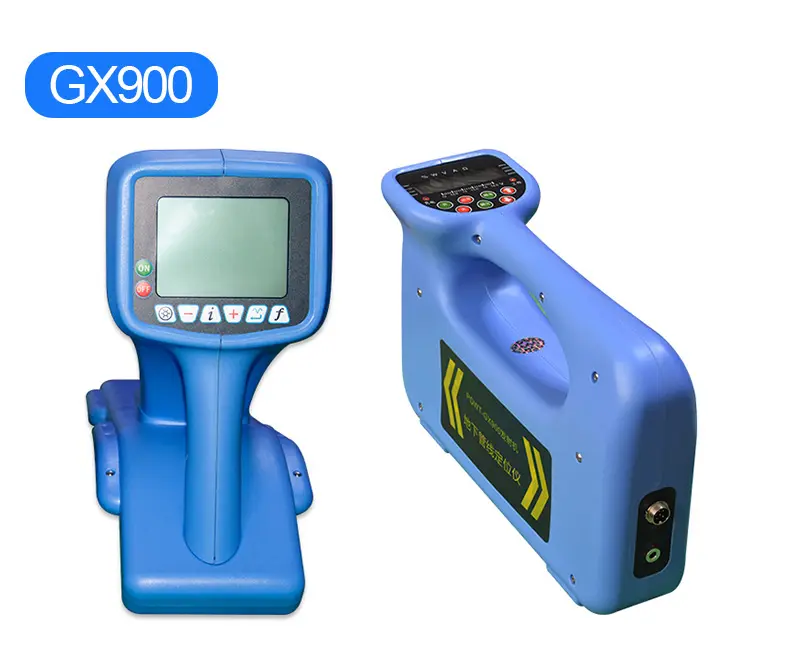
Underground utility route locating
Trace compatible buried metallic pipes and cables and support route mapping before leak pinpointing.
View product →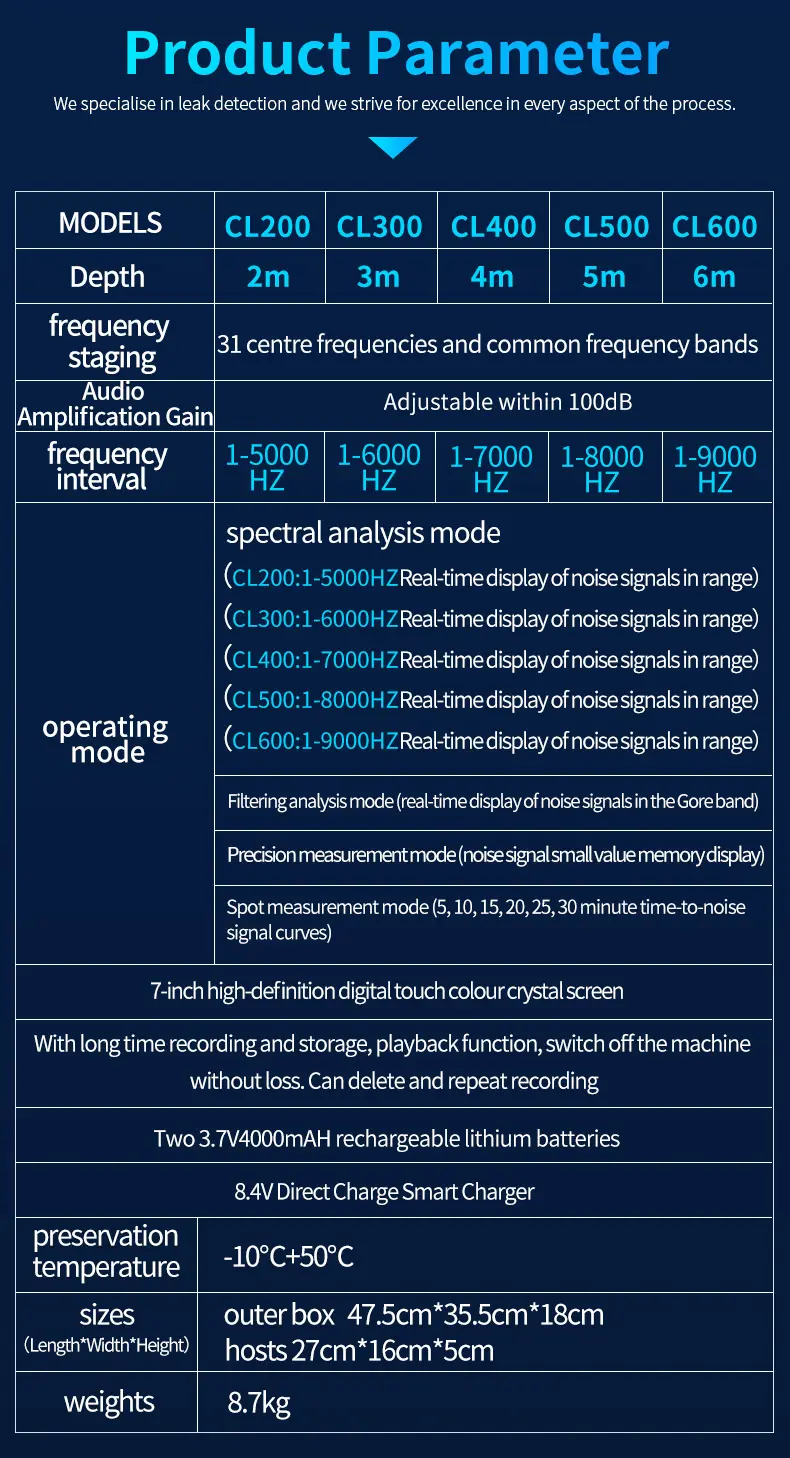
Acoustic spectrum analysis
Compare sound and frequency information on accessible and buried pressurized pipelines.
View product →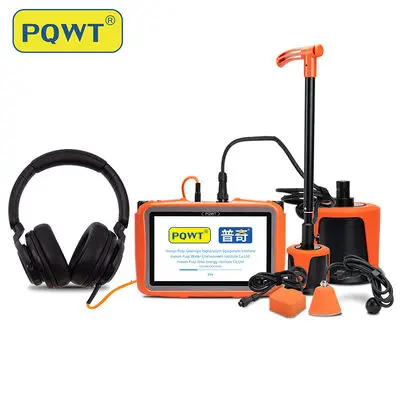
Multi-sensor leak locating
Use general detection, precise locating and spectrum modes across varied indoor and outdoor sites.
View product →Frequently asked questions
Can GPR detect a water leak directly?+
Usually not. GPR may show a pipe, trench, void or moisture-related change, but another method should confirm the leak point.
Can GPR find plastic water pipes?+
Sometimes, when the pipe or its trench creates enough contrast and the depth, diameter and ground conditions are suitable. Conductive clay, saturation and reinforcement can prevent a useful result.
Is acoustic detection better than GPR for water leaks?+
For a known pressurized pipe route with usable leak sound, acoustic comparison is normally more direct for pinpointing. GPR is stronger as a route and subsurface-context tool.
What method works when a plastic pipe leak is too quiet?+
Tracer gas can be effective when the pipe can be safely isolated and prepared. Correlation configured for the pipe and close acoustic spacing may also help.
What details are needed to recommend leak-detection equipment?+
Provide pipe material, diameter, pressure, burial depth, route length, surface, access points, symptoms, destination and preferred training language.
PROJECT REVIEW & MODEL SELECTION
Choose the right method before buying equipment
Send the pipe material, diameter, pressure, depth, route length, surface, access points and symptoms. We will suggest a practical locating and verification workflow.