For a pressurized plastic water pipe with a repeatable leak sound, begin with acoustic detection and use short, consistent sensor spacing. If the signal is too weak because the leak is small, pressure is low, the pipe is deeply buried or the environment is noisy, tracer gas is often the stronger method. Confirm the pipe route, isolate the test section and verify every suspected point before opening the surface.
Plastic water pipes are common in homes, irrigation systems, commercial buildings and utility networks because they are corrosion-resistant, light and flexible. Those same properties make leak detection more difficult: PVC, PPR, PE and HDPE usually transmit less vibration than copper, steel or ductile iron.
A professional survey should therefore begin with the pipe conditions rather than a promise about detector depth. Pressure, leak size, pipe diameter, burial material, surface construction and background noise determine whether an acoustic signal can be measured. When sound is unreliable, tracer gas provides a complementary way to reveal the leak area.
Why leaks in plastic pipes can be difficult to hear
A pressurized leak creates turbulence at the defect. Part of the energy travels through the water and pipe wall, and part passes into the soil, floor or wall. Rigid metal carries this vibration over longer distances. Flexible plastic absorbs more energy, so the sound can be quieter, lower in frequency and concentrated close to the leak.
The absence of a loud sound does not prove that the pipe is intact. A pinhole at low pressure, a slow joint leak, soft backfill or deep burial may produce only a narrow signal zone. Conversely, pumps, valves, drains and water use elsewhere in the building can create loud sounds that are unrelated to leakage.
More energy, clearer signal
Adequate and stable pressure usually improves acoustic detection. Confirm the permitted pipe pressure before any test.
Use closer test points
Because plastic attenuates vibration, compare more closely spaced points than you would on a rigid metal line.
Contact quality matters
Loose soil, thick insulation, floating floors and layered membranes can weaken or redirect the measured signal.
Control the environment
Traffic, pumps, HVAC equipment, appliances and flowing drains can mask or imitate a leak.
Acoustic or tracer gas: which method fits the site?
Acoustic detection is normally the fastest first method when the water line is operating under pressure. Tracer gas is valuable when the leak is almost silent or when the pipe can be isolated for a controlled gas test. The best professional practice is to change methods when the evidence is weak rather than forcing one instrument to answer every site.
| Site condition | Recommended first method | Reason |
|---|---|---|
| Pressurized pipe with measurable leak noise | Acoustic detection | Fast scanning and direct comparison along the route |
| Small PVC, PPR or HDPE leak | Tracer gas or combined verification | The acoustic energy may be too weak or localised |
| Low-pressure or temporarily empty line | Tracer gas | Gas can escape through defects that produce little water-leak sound |
| Busy road, factory or continuously noisy building | Tracer gas or night acoustic survey | Environmental noise can hide or imitate the signal |
| Pipe route is unknown | Route locating before leak pinpointing | Searching away from the real alignment creates false conclusions |
| Strong repeatable acoustic peak | Acoustic cross-check | Repeat from both directions and compare adjacent control points |
How to use an acoustic leak detector on plastic pipe
Begin at accessible contact points such as meters, valves, manifolds, taps and exposed fittings. Listen for the character of the signal, not only its volume. A leak often produces a continuous hiss or rushing sound, while water use and mechanical equipment may change or cycle.
After narrowing the section, move to the ground, floor or wall above the route. Keep the sensor, contact pressure, frequency settings and spacing consistent. Compare nearby points and gradually reduce the spacing around a repeatable peak. On plastic lines, the useful signal may be very close to the defect, so broad spacing can pass over it.
- Confirm that normal water use, pumps and valves are controlled during the survey.
- Establish a background reference away from the suspected leak.
- Use lower-frequency listening as a starting point when plastic attenuates higher frequencies.
- Repeat every strong point and compare it with points on both sides.
- Check whether the signal follows the pipe route and remains stable over time.
- Do not excavate from one loud reading without pressure, route and site confirmation.
When tracer gas provides stronger evidence
Tracer gas testing introduces a detectable gas into an isolated pipeline section under controlled pressure. A commonly used hydrogen-nitrogen mixture contains a small hydrogen percentage in nitrogen. Gas escaping through the defect migrates through joints, soil or floor layers and is detected above the route with a sensitive probe.
This method is useful for very small leaks, plastic pipes, sprinkler systems, underfloor lines, noisy industrial sites and networks that can be isolated but do not produce a stable acoustic signal. The strongest surface concentration marks a probable zone; wind, ventilation, membranes and soil conditions can move or delay the gas, so the operator should repeat the scan before repair.
- Confirm that the pipeline can be isolated and tested safely.
- Follow local requirements for the gas mixture, regulator, connections and pressure limit.
- Remove or control the test medium as required by the approved procedure.
- Introduce gas gradually and monitor pressure for the required stabilization period.
- Scan the pipe route slowly, including joints, edges and likely gas-exit paths.
- Repeat elevated readings and verify them after ventilation or a short waiting period.
Step-by-step workflow for a concealed plastic pipe leak
Confirm the water loss
Check meter movement, pressure decay, pump cycling or section flow. Exclude normal consumption and meter error.
Map and isolate the pipe
Identify pipe material, diameter, route, valves, branches, depth and surface. Isolate sections to reduce the search length.
Choose the first method
Use acoustic detection for a pressurized audible leak; prepare tracer gas when sound is weak or the line is low pressure.
Scan systematically
Keep settings and spacing consistent. Record readings instead of relying on memory or one visual peak.
Narrow the suspected zone
Reduce spacing, approach from both directions and compare the peak with nearby control points.
Cross-check the result
Repeat at another time, adjust pressure within permitted limits or use a second method when the evidence is uncertain.
Verify before opening
Mark the smallest justified repair area and document the route, settings, pressure and reason for selecting it.
What changes between PVC, PPR, PE and HDPE
All plastic pipes attenuate vibration more than rigid metal, but installation details change the field result. A pipe clipped firmly inside a wall behaves differently from the same material in loose soil. Joint type, diameter, wall thickness, insulation and pressure are as important as the material name.
Buried supply and irrigation lines
Route knowledge and shorter ground-sensor spacing are important. Joint leaks may be quiet and water can travel through the trench.
Indoor concealed plumbing
Control building water use and mechanical noise. Compare manifolds, fittings and floor points before opening finishes.
Flexible service connections
Low-frequency signals may dominate and decay quickly. Use accessible fittings and consider tracer gas for pinholes.
Utility and larger-diameter lines
Pressure, diameter, fusion joints and burial conditions strongly affect the signal. Section isolation and multiple methods may be required.
Common mistakes that create false leak locations
- Searching before the plastic pipe route has been traced or confirmed.
- Using wide sensor spacing and missing a narrow low-energy signal zone.
- Comparing readings collected with different sensor contact or filter settings.
- Treating pumps, drains, valves or nearby water use as leak noise.
- Assuming visible moisture is directly above the defect.
- Using tracer gas without allowing enough migration time or considering ventilation.
- Choosing the highest single reading instead of checking repeatability and adjacent points.
- Promising an exact result without reviewing pressure, material, depth and background noise.
Plastic-pipe leak detection equipment to consider
Choose equipment from the method required by the project. A multi-sensor acoustic system supports indoor and outdoor listening, while an acoustic-plus-tracer-gas configuration provides a second method for difficult low-noise leaks. Confirm the final sensors and accessories in the formal quotation.
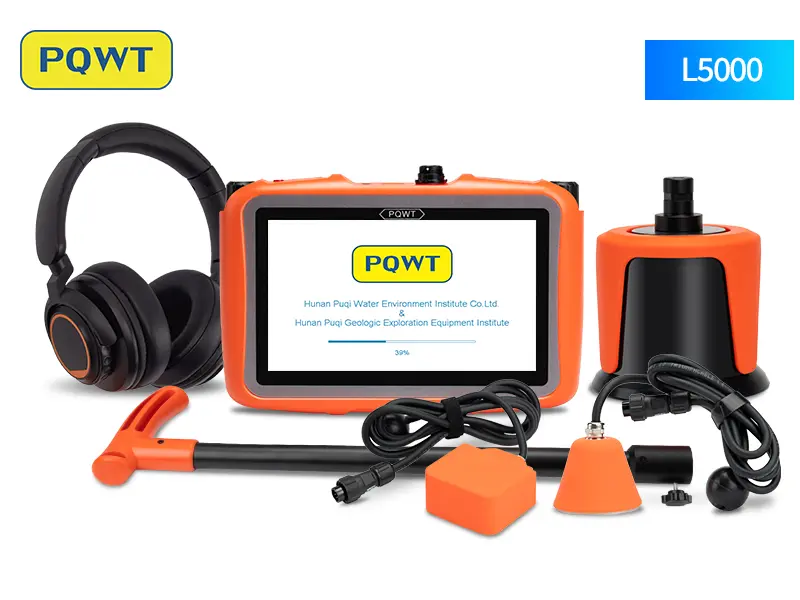
Multi-sensor acoustic workflow
For indoor and outdoor pressure-pipeline screening, frequency comparison and leak-zone verification.
View product →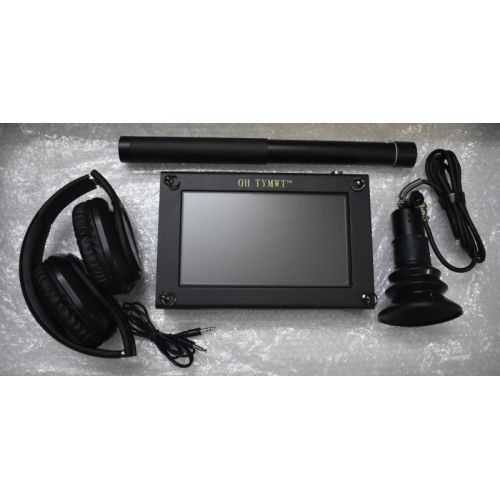
Acoustic and tracer-gas methods
A combined configuration for conventional listening and difficult small-leak applications.
View product →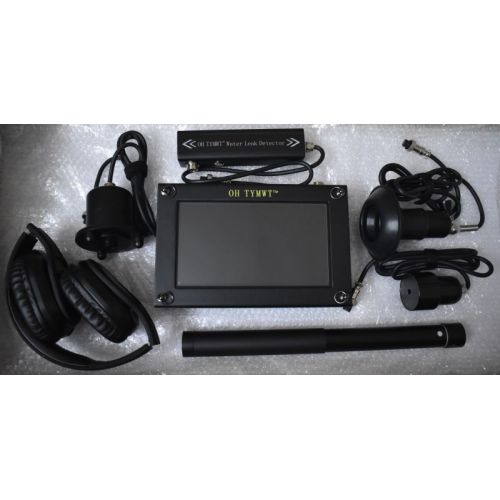
Multi-sensor combined system
Acoustic analysis and tracer-gas capability for varied indoor and outdoor project conditions.
View product →Frequently asked questions
What is the best water leak detector for plastic pipes?+
There is no universal best instrument. Use an acoustic detector when the pressurized leak produces a repeatable sound. Choose tracer gas or a combined system for very small leaks, low-pressure pipes, deep burial or noisy sites.
Can acoustic equipment find a leak in PVC or HDPE?+
Yes, but plastic attenuates vibration. Results depend on pressure, leak size, diameter, depth, soil and noise. Short sensor spacing, good route information and consistent comparisons are important.
Is tracer gas safe for water pipes?+
A suitable approved mixture can be used by trained personnel following the pipeline limits, gas supplier instructions and local safety requirements. The test setup and pressure must be controlled correctly.
Why is the wet spot not always the leak point?+
Water can travel along the pipe trench, insulation, a membrane, a crack or a foundation before appearing. Trace the route and verify the signal rather than excavating only where moisture is visible.
What information is needed before recommending equipment?+
Provide pipe material, diameter, depth, pressure, route length, indoor or outdoor environment, surface, estimated leak size, noise conditions, destination and required quantity.
PROJECT REVIEW & MODEL SELECTION
Need help selecting equipment for a plastic pipe leak?
Send the pipe material, diameter, depth, pressure, route length, surface and background-noise conditions. We will recommend a suitable acoustic, tracer-gas or combined configuration.